

Sue Brown Board member Email Website Sue Brown is an Integrative Nutrition Health Coach and author of “Simply Sugar Free: Six Simple Steps to Conquer Sugar Addiction.” Sue lost 52 pounds in 52 weeks when she was 52 by conquering her lifelong sugar addiction. Equally important, she’s kept off the weight since 2006 — making her quite a unicorn in the world of maintaining significant weight loss. In fact, she is a member of the National Weight Control Registry, which studies people who have successfully maintained weight losses of more than 30 pounds for more than a year. Currently Sue is studying to become certified in Holistic Medicine for Addiction, which integrates multiple addiction treatment paradigms to see and understand the ”big picture” of addiction. It prepares professionals to treat their clients as whole people while addressing all aspects of their disease. She is also becoming certified in the use of the SUGAR® evaluation tool for sugar and carb addiction. SUGAR® is the first and only diagnostic instrument specifically dedicated to assessing addiction and/or pathological use of sugar, carbohydrates such as flour, and other processed foods. Sue retired in 2021 from a 38-year corporate career spanning advertising, public relations, IT and organizational transformation, and brings those skills and more to the institute’s executive committee and board of directors.
The interplay among stress, smartphone addiction, and Food Addiction in adolescents: a cross-sectional study
Kuzucu, Z., & Yılmaz, S. (2025). The interplay between stress, smartphone addiction, and Food Addiction in adolescents: a cross-sectional study. Psychology, Health & Medicine, 1–17. https://doi.org/10.1080/13548506.2025.2602202 Addictive behaviors linked to addictive behaviors.
Childhood traumatic experiences and addiction-like eating behaviors: the mediating roles of attachment, mentalization, and emotional eating
Rossi, A.A., Mannarini, S. Childhood traumatic experiences and addiction-like eating behaviors: the mediating roles of attachment, mentalization, and emotional eating. J Eat Disord 13, 288 (2025). https://doi.org/10.1186/s40337-025-01473-x Discussion: “These findings provide the first empirical support for a trauma-based developmental model of addiction-like eating behaviors. The results highlight the central role of attachment anxiety and impaired reflective functioning in linking early relational trauma to emotional eating and food addiction-like patterns. Clinical implications suggest that mentalization-based interventions targeting attachment insecurity and emotion regulation may be particularly beneficial for individuals with trauma histories and problematic eating behaviors.” PDF

Facing My Artificial Sweetener Addiction
By Rachel ShwalbTreasurer I’ve been in recovery most of my adult life. I’ve been sober since 1993 and I stopped eating sugar and flour in 2003. For a long time, I thought I had dealt with the big addictions. What I didn’t see was the smaller, quieter one that had been building right alongside them: artificial sweeteners. At first, they didn’t feel like a problem. They felt practical. A workaround. A way to have something sweet without “going there.” Over time, though, I relied on them more than I realized. When life felt overwhelming, they took the edge off. Not in a dramatic way. Just enough to get through the day. And the last few years have been a lot. I spent years caring for my mother as her health declined, then dealt with the emotional fallout of clearing out her life after she died. Not long after that, my husband was diagnosed with a rare cancer. During that time, my artificial sweetener use crept up. Diet soda started earlier in the day. I told myself I would deal with it when things calmed down. That thought stopped me. I had said the exact same thing when I was drinking. When I quit, I wasn’t prepared for how exposed I felt. Without the constant sweetness, everything felt sharper. My anxiety felt louder. My worries about work and my husband’s health were harder to push away. I was reminded a lot of early sobriety, when there was nothing between me and my feelings. I realized I had been using artificial sweeteners to avoid sitting with things I didn’t want to feel. Now, eight weeks in, something has shifted. My cravings are quieter. My energy is steadier. Food tastes normal again. More than anything, I feel more present. Not magically better, but more here. If any of this sounds familiar, you are not broken, and you are not alone. And if you’re wondering whether it’s possible to live without that crutch, I can tell you from experience that it is.
Alterations in the resting-state functional networks are associated with Food Addiction: an EEG study
Li, YQ., Cai, HT., Li, SQ. et al. Alterations in the resting-state functional networks are associated with food addiction: an EEG study. J Eat Disord (2025). https://doi.org/10.1186/s40337-025-01488-4 Authors identify the potential that resting-state brain network patterns may facilitate the diagnosis of Food Addiction. Study link
Ultra-processed foods consumption associated with Food Addiction in Chilean young adults
Ximena Díaz-Torrente, Carina Valenzuela, Michelle Valenzuela, and Ashley Nicole Gearhardt, Frontiers in Nutrition, https://www.frontiersin.org/journals/nutrition/articles/10.3389/fnut.2025.1722589/abstract “Conclusion: These findings highlight a significant association between UPF consumption and FA in young adults, suggesting that UPF consumption may potentially contribute to addictive eating behaviors and associated metabolic risks. Public health strategies targeting UPF consumption may be essential in preventing FA and related health conditions.”
Neurocognitive impairments in eating disorders patients with and without comorbid Food Addiction
Munguía L., Granero R., Supit K. et al. Neurocognitive impairments in eating disorders patients with and without comorbid Aood Addiction. J Eat Disord (2025). https://doi.org/10.1186/s40337-025-01494-6 This study had two primary aims: (1) to examine the psychopathological profile and neurocognitive performance of patients with Eating Disorders (EDs), comparing those with Food Addiction (ED FA+) to those without (ED FA−), alongside a Healthy Control (HC) group; and (2) to explore potential correlations between neurocognitive performance and clinical-psychopathological variables. Conclusion: The results underscore the need to assess Food Addiction in ED patients, as its presence may exacerbate symptom severity. Additionally, the results suggest that patients with EDs could benefit from incorporating cognitive rehabilitation into their treatment plans, regardless of FA status. PDF
The Prevalence and Associated Factors of Food Addiction and Internet Addiction in Turkish Adults
Sema Arslan Kabasakal, Ezginur Çelik. The Prevalence and Associated Factors of Food Addiction and Internet Addiction in Turkish Adults. Behav. Psychol. 2025, 33(3), 49435. https://doi.org/10.31083/BP49435 Conclusion: “As a result of the study, it was determined that FA and INTA are common in the Turkish adults. Furthermore, even though it was not found any common protective and risk factors of FA and INTA, it was revealed they are the strongest factors associated with each other and pose a high risk for each other. Based on this, it is concluded that an intervention for one of the FA or INTA in the adult sample will also be beneficial for the course of the other.”
Ultraprocessed Food Consumption and Risk of Early-Onset Colorectal Cancer Precursors Among Women
Wang C, Du M, Kim H, et al. Ultraprocessed Food Consumption and Risk of Early-Onset Colorectal Cancer Precursors Among Women. JAMA Oncol. Published online November 13, 2025. doi:10.1001/jamaoncol.2025.4777 From the conclusion: “These data highlight the important role of UPFs in early-onset colorectal tumorigenesis and support improving dietary quality as a strategy to mitigate the increasing burden of” the disease.
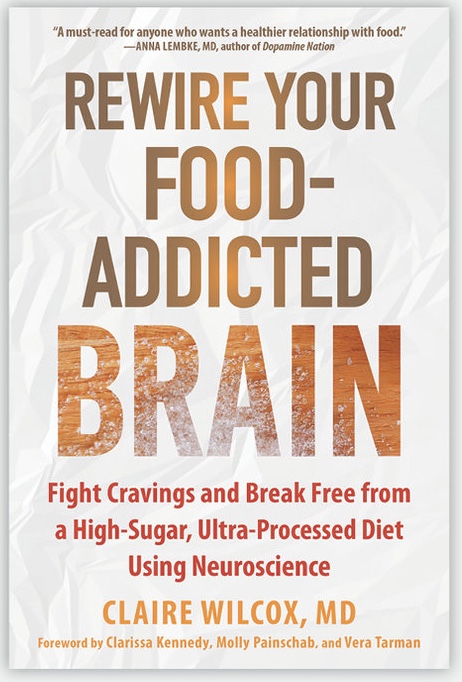
Can You Really Be Addicted to Food? Researchers Are Uncovering Convincing Similarities to Drug Addiction
Dr. Claire Wilcox, psychiatrist, author and researcher at the University of New Mexico, addresses the question in a post for The Conversation. Spoiler alert: “A consensus is emerging that Food Addiction is a real phenomenon. Hundreds of studies have confirmed that certain foods – often those that are high in sugar and ultra-processed – affect the brains and behavior of certain people similarly to other addictive substances such as nicotine.