Generic selectors
Exact matches only
Search in title
Search in content
Post Type Selectors

Am I a food addict?

Is my patient a food addict?

What to look for, what to do, and other resources.

Find help

Treatment providers, nutritionists, educators, peer support, and more

Get your free starter booklet now!

Important!

Tell the World Health Organization about your Food Addiction

Get our starter booklet

Screenshot 2025 02 20 at 11.21.25.jpeg 1

Find help

Treatment providers, nutritionists, educators, peer support, and more

Am I ...

Is my patient...

a Food Addict?

Am I a food addict?

Is my patient a food addict?

What to look for, what to do, and other resources.

Find help

Treatment providers, nutritionists, educators, peer support, and more

Get your free starter booklet now!

logo food addication removebg preview

Food Addiction informed

“Food Addiction Informed” is a basic expression of the institute’s beliefs, helping us, our friends, and affiliates have a clear foundation for what we’re working toward.

Food Addiction is a substance use disorder.

Abstinence from binge and trigger foods and behaviors is essential to recovery.

An action plan that includes substantial support is highly recommended.

Watch and hear the stories of those with Food Addiction

They share what it was like, how it changed, and what it is like to experience recovery.

Research races ahead

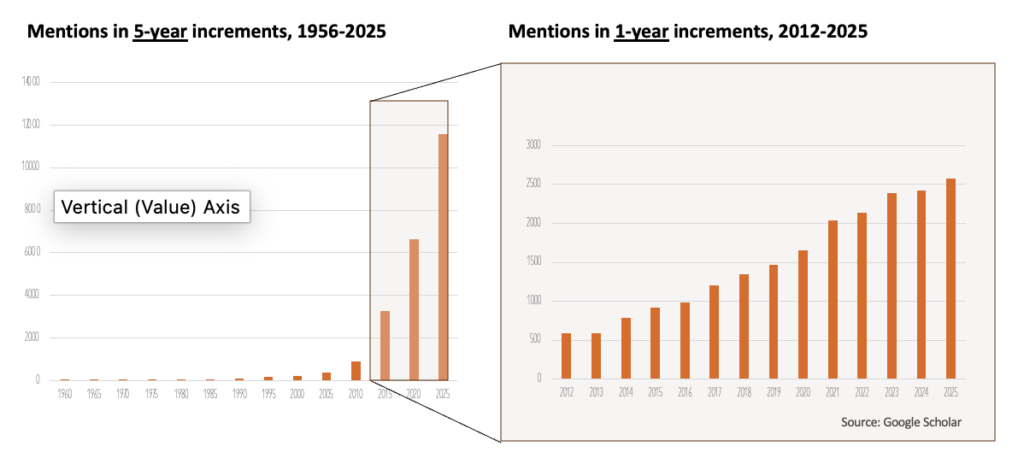
For ages, skeptics would cite the lack of research as evidence that Food Addiction didn’t exist. But that has long since changed: On average in 2025, seven studies using the words “Food Addiction” were published every day, at a pace that has been quickening remarkably for more than a decade.
Image from History page

If they think of it at all, casual observers tend to think the Food Addiction is a new thing, but like many “overnight sensations,” researchers, clinicians, TV figures, authors,  and others have been laying the groundwork for Food Addiction for seven decades: More than a hundred milestones, more than 75 people.

Questions & Answers

Q1: "What Is Food Addiction?"
It is a substance use disorder, as yet institutionally unrecognized, defined by a biochemical sensitivity to some foods, food-like substances, and behaviors.
Q2: “How can you be addicted to something you need to survive? What's next, air addiction?”
OK, maybe "Food Addiction" isn't the best name, because, for example, Alcoholics Anonymous isn't called "Fluids Anonymous." People with addictions do need to eat and drink, but avoid substances that lead them into physical and emotional pain.
Q3: "How does Food Addiction differ from other disordered eating?"
Food Addiction and eating disorders overlap quite often; you don't have only one or only the other. But Food Addicts experience a biochemical sensitivity to some substances that other disordered eaters don't.
Q4: "What are trigger foods?"
Some substances, such as refined sugar, are cited by many Food Addicts, but trigger foods vary among people. By seeking treatment and/or finding community with others who have self-identified as having Food Addiction, they can begin to explore what their own trigger foods might be.
Q5: "What do I do, once I've identified a trigger food of mine?"
Abstain from it. Many in the world of nutrition advocate for moderation, and that can work for many people. But those with Food Addiction find they are happier when they are free from their triggers — even if they still think those foods taste good.
Q6: "So, I just cut out my trigger foods, and all is good?"
Perhaps. Many with Food Addiction have emotional and spiritual deficits that drive their eating. Addressing those — by engaging in communities of others who can relate, by working with professionals, or by other means — they're more able to make sane and healthy food choices, no matter the moment's circumstances.
Q7: "'Food Addiction?' 'Ultra-processed food addiction?' Even ‘ultra-processed food use disorder?'"
There's the condition, and what it's called. These name changes are part of efforts toward recognition in the world's leading diagnostic manuals. Ultra-processed foods play a very strong role in Food Addiction, but Food Addiction is not limited to ultra-processed food.
Q8: "Don't GLP-1s cure all this?"
They may be revolutionary, but they are not a cure. It is a physical solution that can't address what drives people to overeat. But it can be a great tool for those who want to work on the mental, emotional, even spiritual causes of persistent unhealthy eating.
Q9: "Is there science behind Food Addiction?"
Yes! Go here and read our ever-growing collection of peer-reviewed articles. Research shows that some foods and food-like substances light up the same areas of the brain that cocaine, alcohol, and other substances and behaviors do.
Q10: “But those are real drugs. No one ever robbed the corner store so they could score with their Twinkies dealer.”
True. Addictive substances provoke different intensities and drive different behaviors, but the effects on Food Addicts are substantial. One need only look to the World Health Organization — for statistics on how fast obesity is increasing or how those with obesity die sooner on average than others.
Q11: "Are you saying that all obesity is explained by Food Addiction?"
Absolutely not; many factors cause disordered eating. What raises Food Addiction to the level of substance-use disorder is the biochemistry involved in trigger foods. Food Addiction treatment will likely help anyone who experiences disordered eating, but is a must for those who experience the phenomenon of craving.
Q12: "Why does it matter that Food Addiction is real?'"
Several reasons, such as that when a food-use disorder is recognized, treatment for it will be reimbursable by insurance. Food Addiction treatment has existed for decades and helped thousands, but it has remained out of the financial reach of most people, and imposed a financial burden on the rest.
Q13: "What are the behaviors of people who have Food Addiction?"
It's impossible to craft a complete list because people are individuals. But here are three to start: Getting a food one craves, no matter the time of day or night; grazing (eating/snacking all day long); and volume eating, which may be bingeing for more than two hours.

The Latest in Food Addiction

The Latest in Food Addiction illo

Interviews, podcasts, and more

Interviews by the institute's Cynthia Myers-Morrison

Food Junkies podcasts

SHiFT blog post

Video meetings, call-ins, and other live events

All are free; times are Eastern US [GMT-4]

What we do, who we are

few people walking towards a sunset

© Food Addiction institute | All rights reserved