e5b602 e7d9ab62b4c84a00a533d87f1c59be20mv2 The Diagnostic and Statistical Manual of Mental Disorders, Fifth Edition (DSM-5) no longer uses the terms “substance abuse” and “substance dependence.” Rather, it refers to substance use disorders, patterns of symptoms resulting from the use of a substance that one continues to take, despite experiencing problems as a result. A substance use disorder (SUD) is a chronic brain disease, and like other chronic diseases it involves periods of recovery and periods of relapse. Medication and/or behavior change are needed to manage and treat the disease. SUD Symptoms The DSM-5 identifies 11 criteria (symptoms) in 4 categories as shown below. Impaired Control Take substance in larger amounts or over longer period than intended Repeatedly try without success to decrease or discontinue substance use Spend much time obtaining, using, and recovering from substance Craving—intense desire/urge for substance Social Impairment Failure to fulfill major obligations because of repeated substance use Continued use of substance despite persistent social and interpersonal problems caused or exacerbated by use Give up important social, occupational, or recreational activities because of substance use Risky Use Recurrent use when it is physically hazardous Recurrent use despite knowing that it has probably caused ongoing physical or psychological problems Tolerance & Withdrawal Tolerance—need increased amount to achieve same effect Withdrawal—experience withdrawal symptoms or continue using to keep from having withdrawal Food addiction is a term that is used to describe a pattern of eating consumption and behaviors with the same criteria for substance use disorder. e5b602 ff86724359234ac9a63b892502e76904mv2 Substance use disorders are classed as mild, moderate, or severe, depending on the number of criteria met: Two or three symptoms indicate a mild disorder. Four or five symptoms indicate a moderate disorder Six or more symptoms indicate a severe disorder. The prevalence of substance use disorders is similar to that of other chronic diseases. 8.1% of the US population aged 12 and over has a substance use disorder.* 9.3% of the US population has diabetes.* 7.7% of the US population has asthma.*** 29% of American adults have high blood pressure.**** Download Food Addiction Disorder NIDA. “Preface.” National Institute on Drug Abuse, 30 May. 2023,https://nida.nih.gov/research-topics/addiction-science/drugs-brain-behavior-science-of-addictionhttps://nida.nih.gov/publications/drugs-brains-behavior-science-addiction/drug-misuse-addiction Center for Behavioral Health Statistics and Quality. (2015). Behavioral health trends in the United States: Results from the 2014 National Survey on Drug Use and Health (HHS Publication No. SMA 15-4927, NSDUH Series H-50).https://www.samhsa.gov/data/sites/default/files/NSDUH-FRR1-2014/NSDUH-FRR1-2014.pdf **2014 National Diabetes Statistics Report. Centers for Disease Control and Prevention Web site.https://www.cdc.gov/diabetes/data/statistics/2014StatisticsReport.html *** National Current Asthma Prevalence (2015). Centers for Disease Control and Prevention Web site.https://www.cdc.gov/asthma/most_recent_data.htm ****High Blood Pressure Facts. Centers for Disease Control and Prevention Web site.https://www.cdc.gov/bloodpressure/facts.htm. Updated November 30, 2016
Tolerance and Withdrawal
Tolerance and Withdrawal One of the criteria for substance use disorder is tolerance, which means that a person needs to consume more of a substance over time to achieve the effects that lesser amounts no longer produce. Tolerance results in the person needing to eat more food, or more specific foods, or more individually identified trigger foods to achieve the same rewarding or pleasurable effects. These effects are the result of releases of dopamine in the brain. When a person repeatedly does something that releases dopamine in the reward system, such as smoking a cigarette or eating a Snickers bar, the brain begins removing dopamine receptors to keep things balanced. With fewer receptors, more dopamine is needed to reach the same effect. Withdrawal is when a person experiences unpleasant symptoms when they stop using a substance or uses the substance to avoid those symptoms. For food addiction, this could mean that a person feels anxious, irritable, or depressed when they abstain from certain foods or consumes those foods to relieve their negative mood. When there are fewer dopamine receptors, eating even the former amounts will produce unease and unhappiness when Food Addicts don’t get their individual identified trigger food “fix.” Tolerance and withdrawal are associated with addictive disorders.
Understanding Triggers and Cravings
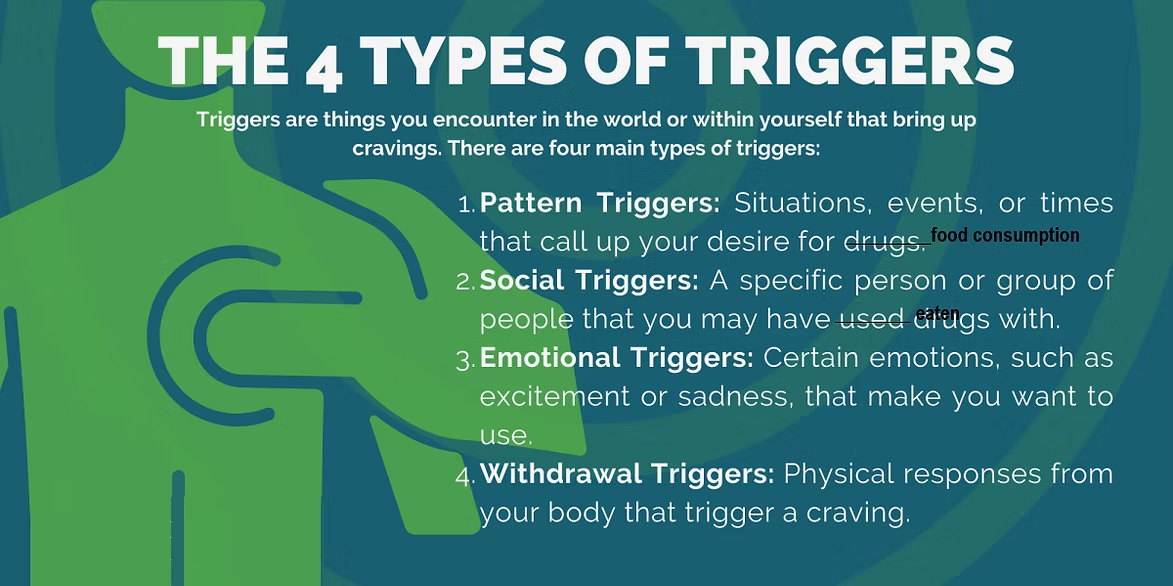
What Are Cravings? Cravings are a key part of addiction awareness and recovery. They are intense feelings that make you want to use the substance again. They are driven by the desire to experience the same positive effects that you had before. However, cravings are more complex than they seem. A craving is a combination of a mental and emotional urge, as well as a physical demand from your brain chemistry. Substances affect your brain by releasing chemicals that make you feel happy and rewarded. When you stop using those substances, your brain produces cravings to make you seek that reward again in the same unhealthy way. How Long Do Cravings Last? Cravings can be short-lived and disappear in a few moments, but sometimes they can last for hours or even days. Moreover, even if you have been abstinent from the substance for a long time, you may experience cravings again after many years of recovery. Understanding and Managing Your Triggers What are Triggers? If you struggle with addiction, you probably know what triggers are. They are the things that make you crave the substance or behavior you are addicted to — food, alcohol, drugs, nicotine, gambling, or something else. Triggers can be external or internal. External triggers are the people, places, situations, or objects that remind you of your addiction. Internal triggers are the thoughts, feelings, or sensations that make you want to use. Triggers can be very powerful and hard to resist. That is why it is important to have a strategy for dealing with them. One strategy is to avoid your triggers as much as possible. Sometimes, however, you will encounter them unexpectedly or unavoidably. In those cases, you need a plan for how to cope with your triggers without giving in to them. Some coping strategies include: Distract yourself with something positive and healthy, such as listening to music, reading a book, going for a walk, or calling a friend. Remind yourself of the benefits of staying abstinent, and why you want to abstain from the addictive behavior. Use positive self-talk to encourage yourself and challenge any negative thoughts that might tempt you to use. Practice relaxation techniques, such as deep breathing, meditation, or yoga, to calm yourself and reduce stress. Seek support from someone who understands what you are going through, such as a therapist, a sponsor, a family member, or a friend. Celebrate your progress. Triggers are inevitable when you are recovering from addiction. But they don’t have to control you. By understanding your triggers and having a plan for how to cope with them, you can increase your chances of staying sober and achieving your recovery goals. Trigger Foods Food Addicts can recognize which foods have triggered them to lose control over their food consumption, quantities, choices, and timing of their eating episodes, if they have progressed in the disease. Individually identified trigger foods cause a person to: Lose control over their consumption. Lose control over their eating. Experience intense cravings, binge, or compulsively overeat. Experience impaired control and spend a lot of time thinking about, engaging in, and recovering from food consumption. Experience social impairment, with lowered engagement in physical, mental, and social aspects of a healthy quality of life. Engage in risky use that leads to depression, increased risk of diabetes, hypertension, cardiovascular disease & some cancers. Experience persistent cravings and negative affects when attempting to regulate food consumption Individually identified trigger foods are different for each person, depending on their personal history, physiology, and psychological factors. Often people are triggered by fast foods, sweet foods, salty foods, junk foods, baked foods, and foods served at celebrations. Some common examples of trigger substances are: sugar flour chocolate pizza chips ice cream Food Addicts need to abstain from their individually identified trigger foods because when they consume them, they act like drugs in their brains and bodies, activating the reward and pleasure centers and releasing neurotransmitters such as serotonin, dopamine, oxytocin, and endorphins. Recovery from food addiction Observe what foods trigger your uncontrollable food consumption behavior. Make a list of your individually identified trigger foods. Abstain from your individually identified trigger foods to begin freeing your body from cravings. By eliminating the foods that cause loss of control over food consumption, food addicts can regain their sanity, health, and freedom. They can also learn to cope with their emotions and stress in healthier ways, without using food as a drug or substance. Go through withdrawal from those individually identified trigger foods that acted like substances affecting your brain chemistry and physical health. Work with a Food Addiction Informed professional to create a customized food plan that includes healthy foods in appropriate quantities, consumed in variety, and timed to energize your brain and nourish your body. Join a peer support group to learn and practice alternative ways of dealing with life’s challenges. Such groups can support you to live the life you want rather than struggling with adverse health complications resulting from addiction to food as a substance use disorder. Develop a daily practice of self-care that includes meal planning, scheduling time for yourself, exercise, and maintenance. Create a support network and environmental safeguards to prepare your abstinent meals, protect your recovery, plan for emergencies, and prevent relapse. Abstaining from trigger foods is not a diet or a punishment, but a way of life that allows food addicts in recovery to enjoy food as nourishment and pleasure, not as an escape or a trap.
Understanding Food Addiction Substance Use Disorder
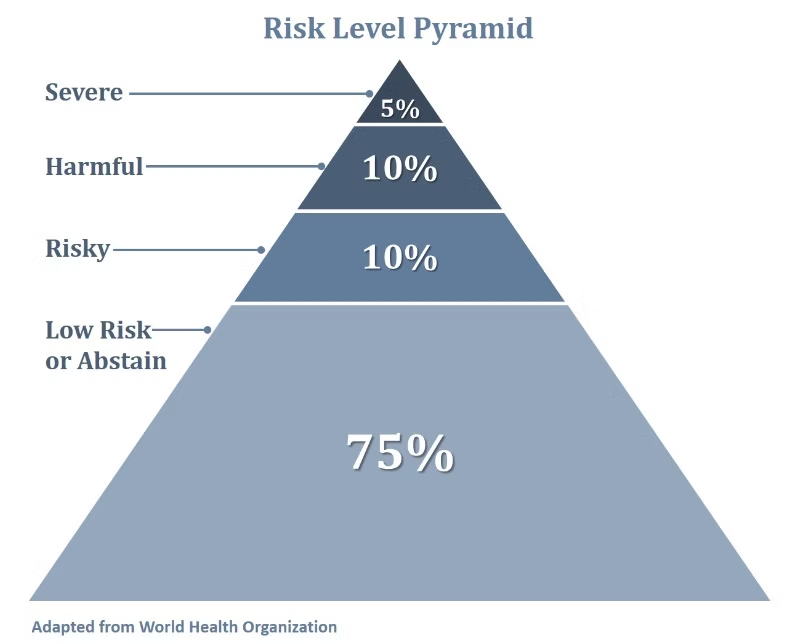
image121313 Traditionally, attention has focused on the two extremes of the continuum of substance use: Abstinence and Severe Substance Use Disorder (also called addiction). However, most people’s substance use does not fall into either of these extremes. Substance use ranges across a continuum from No Use (abstinence) Low-Risk Use Risky Use Harmful Use, to Substance Use Disorder People aged 18-25 account for the highest prevalence of substance use and substance use disorders. The Diagnostic and Statistical Manual of Mental Disorders, Fifth Edition (DSM-5) lists 11 criteria (symptoms) for diagnosis of a substance use disorder: mild = 2-3 symptoms moderate = 4-5 symptoms severe = 6 or more symptoms Most people who use substances are able to meet their obligations; without routine screening, their health providers may not be aware of their substance use. The incidence of co-occurring mental health and substance use disorders is often underestimated; integrated treatment is most effective. Without routine screening in place, it’s likely most clinicians are unaware of their patient’s food addiction substance use. Understanding a person’s substance use requires knowing not only what the person uses but also how he or she uses substances. A person’s use falls along a continuum ranging from no use (abstinence), through low-risk use, risky use, harmful use, to the chronic, relapsing brain disease known as a severe Substance Use Disorder (SUD). Even if patients have not had repeated negative consequences, food addiction substance use could still be affecting their health. With proper screening to identify the potential for food addiction as distinct from other eating disorders and food issues, a Certified Food Addiction Professional can assess the stage of food addiction and identify the severity level to provide appropriate treatment to achieve recovery from progressive symptoms. Source: Substance Abuse and Mental Health Services Administration. Results from the 2015 National Survey on Drug Use and Health: Detailed Tables. Retrieved from https://www.samhsa.gov/data/sites/default/files/NSDUH-DetTabs-2015/NSDUH-DetTabs-2015/NSDUH-DetTabs-2015.htm#tab5-2b.

Martha Williams
Edit Template Personalized Virtual Therapy Ontario, Canada williams.martha@icloud.com 416-573-2074 I offer virtual individual sessions that are often covered by health insurance owners in Ontario (check your benefits to find out if they cover Registered Psychotherapists). I offer a free 15-30 minute consult upon request. I am a Registered Psychotherapist (RP) -, and work with trauma, addiction, IFS therapy and EFT tapping.
Aglon Recovery
Edit Template Amman, Jordan +962777770770 hello@aglonrecovery.com www.aglonrecovery.com Aglon’s mission is to address the realities of Food Addiction and weight management, guiding you through a transformative journey toward health — physically, emotionally, mentally, and spiritually. We believe in empowering individuals to change their lives by embracing food freedom. Many struggle with using food to cope with stress and emotions, often finding it difficult to stop eating certain foods. Recognizing that some foods can be addictive, we understand that food-related challenges can affect overall well-being.
Helle Madsen
Edit Template Denmark helle@blivsukkerfri.dk https://spisrigtigmad.dk https://blivsukkerfri.dk +45-29479917 Helle is a recovering addict herself and her passion is to help other women get out of the roller coaster of weight loss and gain. Helle is a certified social worker, supervisor, and coach. She has worked in therapy and coaching for many years. In 2021, she started a sugar addiction recovery program in Denmark. She is SUGAR®/HMA®-certified and licensed Bliv Sukkerfri.
Anna Kuyumcuoglu
Edit Template Wall Street Therapy New York City wallstreettherapy@gmail.com 917-538-8292 I offer trauma treatment, addictions treatment, and somatic-based psychotherapy.
Are All Ultra-Processed Foods Unhealthy?
ultra Ultra-processed foods Have undergone extensive industrial processing, such as melting, extruding, shaping, adding flavorings, colors and other additives, and include man-made ingredients that don’t occur naturally, such as artificial sweeteners, emulsifiers, and preservatives. Include products like breads, cereals, snack chips, frozen meals, soft drinks, candy, foods marketed to children, and packaged foods that may be promoted as “healthy”. Ask ChatGPT According to the NOVA food classification system, ‘ultra-processed foods’ are formulations of several ingredients which, besides salt, sugar, oils and fats, include food substances not used in culinary preparations, in particular, flavours, colours, sweeteners, emulsifiers and other additives used to imitate sensorial qualities of unprocessed or minimally processed foods and their culinary preparations or to disguise undesirable qualities of the final product. According to a recent article in The Washington Post, Ultra-processing degrades the internal structure or “food matrix,” the complex internal structure that not only holds the corn together, but influences the bio-availability of the nutrients, how our bodies use the food and whether we feel full after eating it. Ultra-processed foods can have negative effects on your health in several ways They are often high in calories, sugar, salt and fat, but low in fiber, protein and micronutrients. This can lead to overeating, weight gain, obesity and chronic diseases like diabetes, heart disease and cancer They are often predigested, meaning that they have been broken down by heat or enzymes before you eat them. This can affect how much you absorb and metabolize the nutrients in the food, as well as your appetite and hunger hormones. They can alter your gut microbiome, the community of bacteria and other microbes that live in your digestive tract. These microbes play a role in your immune system, metabolism and mood. Ultra-processed foods can reduce the diversity and quality of your gut microbiome, which can increase inflammation and disease risk. What to Eat (Instead of Ultra-Processed Foods) The best way to avoid ultra-processed foods is to eat more whole or minimally processed foods, such as fruits vegetables eggs fish meat dairy These foods provide more fiber, protein and micronutrients than ultra-processed foods, and they can help you feel fuller and more satisfied. Prepare Your Own Meals Control what goes into your food and avoid unnecessary additives Plan and prepare meals using fresh or frozen ingredients Use herbs, spices, vinegar, lemon juice and other natural flavorings to enhance the taste of your food Investigate Foods Before Purchasing Check ingredients and food nutrition labels Choose foods that have fewer ingredients, include less added sugar, salt and fat, are grown locally, are natural, are seasonal, require chewing, have texture and crunch, and have vibrant colors. Compare different products to find the healthiest option Do not trust the packaging or promotions about “healthy” foods Make sure that sugar is not listed in the first 5 ingredients Eating less ultra-processed foods can benefit your health in many ways; lower your risk of chronic diseases improve your gut health recover from cravings achieve long term recovery from food addiction bmjultraprocessed.pdf NOVAclassification.pdf unhealthy ultra-processed foods.pdf