
The institute has been working toward recognition for Food Addiction in the two key diagnostic manuals practically since it was formed in 2005. We could and did say what we knew about Food Addiction, but one of the rejoinders was, “where’s the research?”
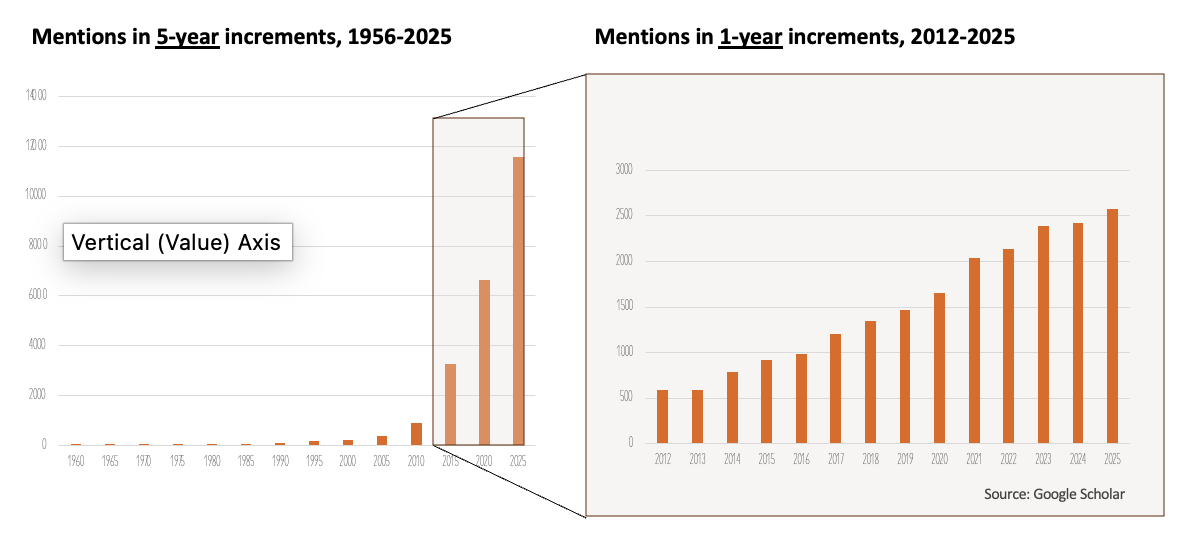
From when Theron G. Randolph introduced “Food Addiction” into academic literature in 1956, until the institute’s founding, fewer than a thousand studies mentioned the term. This is according to Google Scholar, which focuses on journal articles, theses, technical reports, etc., but leaves out news, editorials, and books.
What about now?
From 1956 through the end of last year, a Google Scholar query for “Food Addiction” returns close to 23,500, about 9 in 10 of those since 2012. A huge factor in that explosion is the Yale Food Addiction Scale, which was published in 2009 and made it much easier to screen for Food Addiction. It mirrors the American Psychiatric Association’s criteria for substance-use disorders and has been cited academically more than 800 times, according to the University of Michigan.
It wasn’t until 2017 that more than 1,000 were published in one year, and last year, that number grew to almost 2,600. That’s 7 studies per day!
Google Scholar is a blunt instrument for measuring this, but the numbers certainly show that researchers are well beyond the days when no researcher with ambition was willing to put “food” and “addiction” even in the same sentence.
No one can ask anymore, “where’s the research?”