
By Cynthia Myers-Morrison
Board secretary
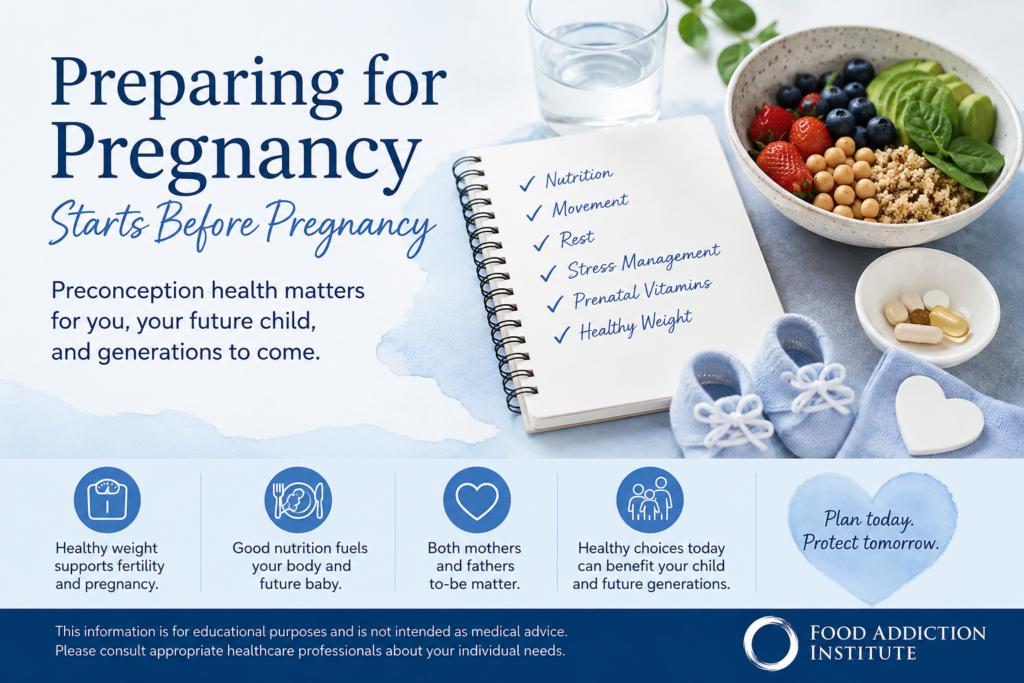
Obesity and Food Addiction run in families. The impacts of underweight or excessive weight, whether due to obesity or Food Addiction, manifest as malnutrition and are multigenerational. To impact not only the pregnancy but also the health of the child(ren) through their lives and those of grandchildren they conceive, the following information may be used to prepare for pregnancy. This might be applied to anyone considering conceiving or anyone engaging in sexual activities, for we all know pregnancies can occur in this way at ages from newly pubescent to those days when perimenopausal women think they are menopausal and are not yet.
William Rayburn, MD, MBA, an emeritus distinguished professor and department chair at the University of New Mexico, has more than 50 years of experience as an obstetrician-gynecologist, including many years as a maternal-fetal medicine subspecialist. According to Dr. Rayburn, obstetrician-gynecologists are increasingly involved in preventive outpatient care. Many women of reproductive age consider their ob-gyn to be their primary healthcare provider. As a result, discussions about contraception, future pregnancy, and overall health are common during routine office visits. Ideally, a woman’s health should be evaluated at least two to three months* before conception so that any medical or nutritional concerns can be addressed before pregnancy begins.
In the same way that women are encouraged to avoid alcohol and recreational drugs prior to and during pregnancy, appropriate food choices should also be considered. Succumbing to desires for midnight access to ooey, gooey, sweet, and starchy foods is probably not desirable, after all. Oh, and these recommendations apply to fathers-to-be as well as mothers-to-be. Males have an impact. Optimal weight at conception does make a difference for fertility and health of the fetus, the child, and future offspring. Age of the father may also impact the incidence of autism.
Per Dr Rayburn: “Good nutrition is one of the cornerstones of preconception care. Although nutrition research can be challenging because many factors influence pregnancy outcomes—including socioeconomic conditions, body weight, physical activity, stress, genetics, and previous pregnancy complications—a healthy dietary pattern remains one of the most important modifiable factors. Good nutrition not only supports fertility ** but also prepares the mother’s body for the increased metabolic demands of pregnancy.”
During annual examinations, Dr. Rayburn emphasizes maintaining a healthy lifestyle. Because nearly one-third to one-half of women of reproductive age are overweight or obese, achieving a body mass index (BMI) between 18.5 and 24.9 before pregnancy is encouraged whenever possible. Women with conditions such as malabsorption disorders, prior bariatric surgery, restrictive diets such as veganism, or eating disorders often benefit from more individualized nutritional counseling.
Dr. Rayburn further suggests that for most women planning pregnancy, taking a daily prenatal vitamin is a simple and worthwhile step. Prenatal vitamins typically contain 400 to 800 micrograms of folic acid, an amount shown to substantially reduce the risk of neural tube defects when started before conception and continued during early pregnancy. Women at particularly high risk for having a pregnancy affected by a neural tube defect may require a much higher dose of folic acid under medical supervision. Depending on individual risk factors, laboratory testing such as a complete blood count or hemoglobin A1C may also help identify anemia, nutritional deficiencies, or previously unrecognized diabetes.
“Women planning pregnancy should view the preconception period as a training program for a healthy pregnancy. A balanced diet rich in fresh or frozen vegetables, fruits, whole grains, legumes, fish, poultry, low-fat dairy products, and healthy unsaturated fats*** provides the nutrients needed for maternal health and fetal development. Limiting fried foods, highly processed foods, sugar-sweetened beverages and foods, and alcohol is advisable, while caffeine intake should generally remain below 200 mg per day. Regular physical activity, adequate sleep, and effective stress management complement good nutrition and contribute to overall well-being.”
“Although no diet can guarantee a healthy pregnancy, women who enter pregnancy in good health are more likely to conceive successfully and experience fewer complications. Healthy lifestyle habits before and during pregnancy are associated with lower risks of gestational diabetes, hypertensive disorders of pregnancy, excessive weight gain, and preterm birth. Furthermore, women who develop gestational diabetes or hypertensive disorders during pregnancy have an increased risk of developing type 2 diabetes, chronic hypertension, and cardiovascular disease later in life, making healthy nutrition and lifestyle choices important well beyond pregnancy itself.”
“As research continues to evolve, there is growing interest in how a woman’s health before conception may influence not only pregnancy outcomes but also the long-term health of her child. Although much remains to be learned, evidence suggests that establishing healthy eating habits, maintaining a healthy body weight, and addressing nutritional deficiencies before pregnancy create the best possible environment for fetal development. While no single diet or supplement can guarantee a healthy pregnancy, thoughtful preconception counseling offers women an important opportunity to optimize their health before conception and may provide benefits that extend beyond pregnancy and into the next generation.”
Please share this with people you know. Our world will be better for increased understanding of the benefits of planning, preparing, and protecting ourselves and our offspring. With gratitude to Dr. William Rayburn for his thoughtful and specific comments, not intended to be medical advice. Please check with appropriate health practitioners earlier than you might think you or another might need to do so.