examine the current evidence for the link between addiction and obesity, identifying several fundamental shortcomings in the model, as well as weaknesses and inconsistencies in the empirical support for it from human neuroscientific research.
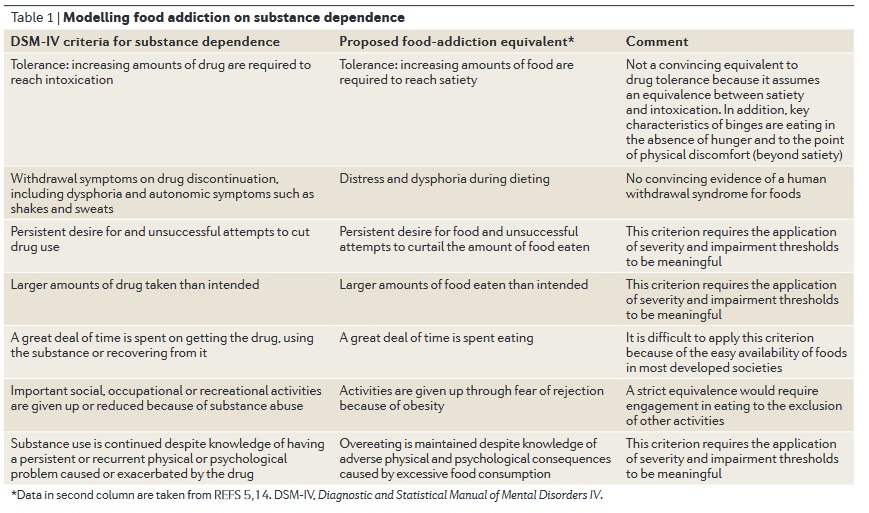
At the outset, it is important to acknowledge that the food-addiction literature has largely adopted the clinical model of addiction as defined by the DSM-IV. Although this model has clinical validity, in the addiction research literature it has been supplemented, and to an extent superseded, by powerful neurobiological models that have decomposed the clinical syndrome in terms of its core cognitive processes and their possible neural substrates (BOX 1). This approach, which is based on a growing
understanding of the neurobiology of addiction, is welcome and — as we discuss — may offer new ways of identifying overlap between obesity and addiction. However, this article is primarily concerned with the
existing arguments in favour of addiction as a model for obesity, arguments that draw on clinical definitions.