
By Asha Valor
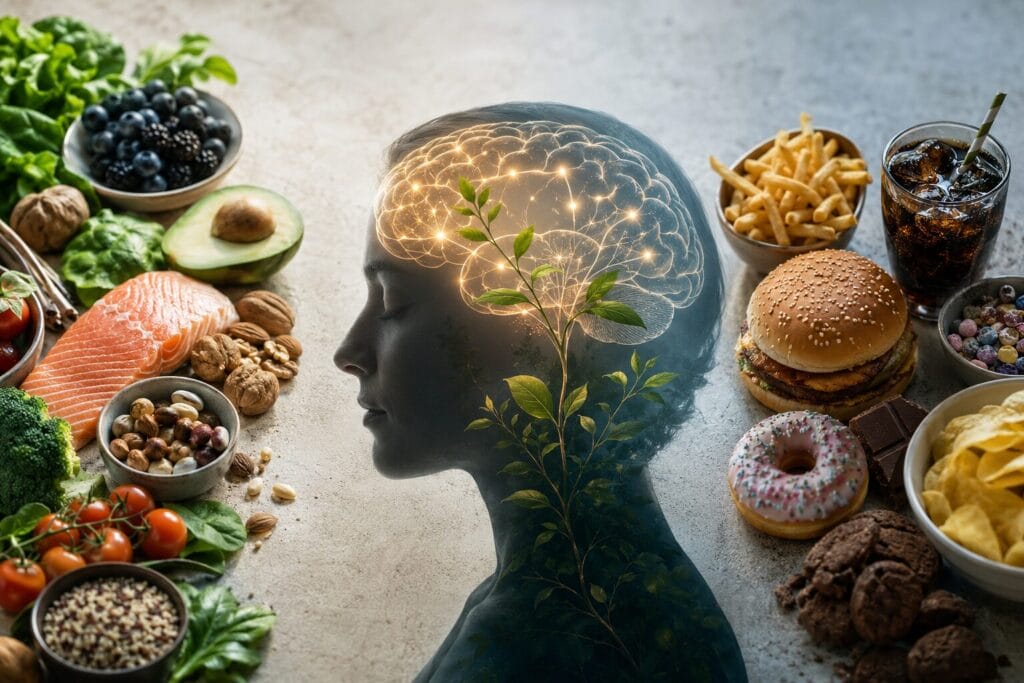
What if you could greatly improve your mental health, just by changing what you eat? Research in the growing field of nutritional psychiatry is showing that many people can.
This connection is particularly important to people with Food Addiction. Highly processed foods can strongly activate the brain’s reward system, creating cravings, loss of control, and continued eating despite negative consequences. For Food Addicts, understanding the relationship between food and mental health may provide another pathway toward recovery.
It goes too far to say that everyone can replace medication, therapy, or other medical care just by eating differently. But research suggests that improving diet quality may support brain health and reduce symptoms for some individuals.
Depression and anxiety
Research has found a strong connection between dietary patterns and depression. Diets that include more whole foods, vegetables, fruits, healthy fats, and adequate protein are associated with better mental health outcomes.
One of the strongest areas of evidence involves the Mediterranean diet. A randomized controlled trial published in BMC Medicine found that improving diet quality significantly reduced symptoms of depression in participants with moderate to severe depression. Researchers believe these benefits may come from improvements in inflammation, gut health, and nutrients that support brain function.
Bipolar disorder and metabolic health
Bipolar disorder is a complex condition that often requires medication, therapy, and ongoing medical care. Researchers are now exploring how metabolism and nutrition may influence symptoms.
Psychiatrist Georgia Ede has highlighted the connection between metabolic health and brain function, including research into ketogenic approaches for serious mental illness. A pilot study examining a ketogenic diet in people with bipolar disorder found improvements in several metabolic markers and reported that some participants experienced changes in mood symptoms.
This research is still developing, but it suggests an important area of study: improving metabolic health may support brain function and mood regulation.
ADHD and other attention difficulties
ADHD affects attention, impulse control, and executive functioning. While nutrition does not cause or cure ADHD, researchers continue to study how diet quality may influence symptoms.
Studies have found associations between ADHD symptoms and dietary patterns, including higher intake of processed foods and lower intake of nutrient-rich foods. Supporting brain health through balanced nutrition may become one helpful part of a broader ADHD management plan.
Food Addiction, stress, and recovery
Food and mental health are closely connected through biology, emotions, and environment. Stress and trauma can influence eating behaviors, and many people use food as a way to cope with difficult emotions.
David Wiss and other researchers studying Food Addiction have emphasized that compulsive eating patterns are not simply a matter of willpower. Ultra-processed foods may contribute to addictive-like eating behaviors by affecting reward pathways in the brain.
Hope in recovery
The growing science of nutrition and mental health offers a more complete view of recovery. Food choices alone do not determine mental health, but they can become an important part of a larger plan that includes medical care, emotional support, and sustainable lifestyle changes.
For Food Addicts, this research provides an important message: Understanding how food affects the brain can reduce shame and create more opportunities for effective support and recovery.