
Children and the new dietary guidelines
By Cynthia Myers-Morrison EdD
Board member
Nearly everyone has heard some kind of commentary about new dietary guidelines issued Jan. 7 by the US government. So, what are the changes and how do they impact children and families?
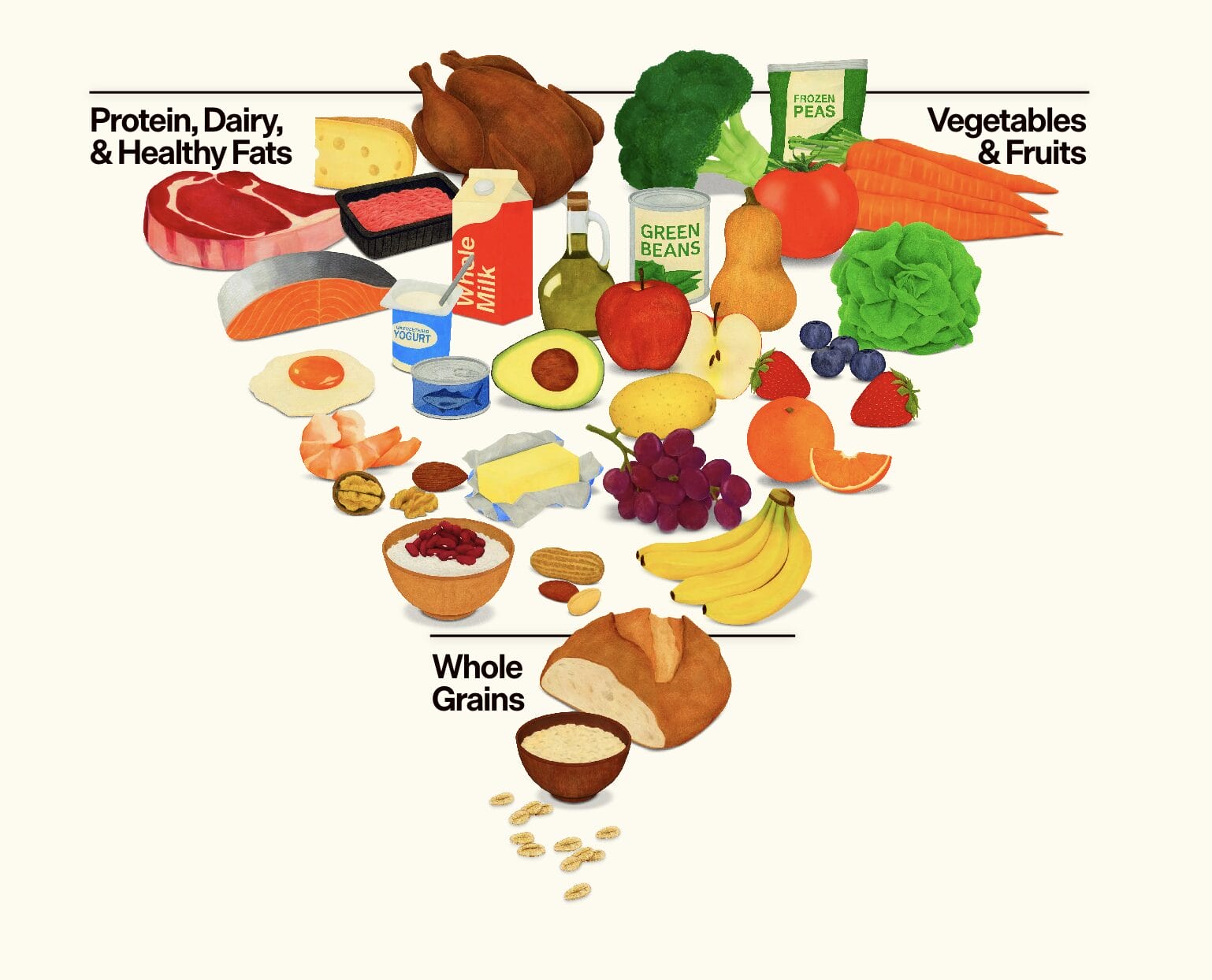
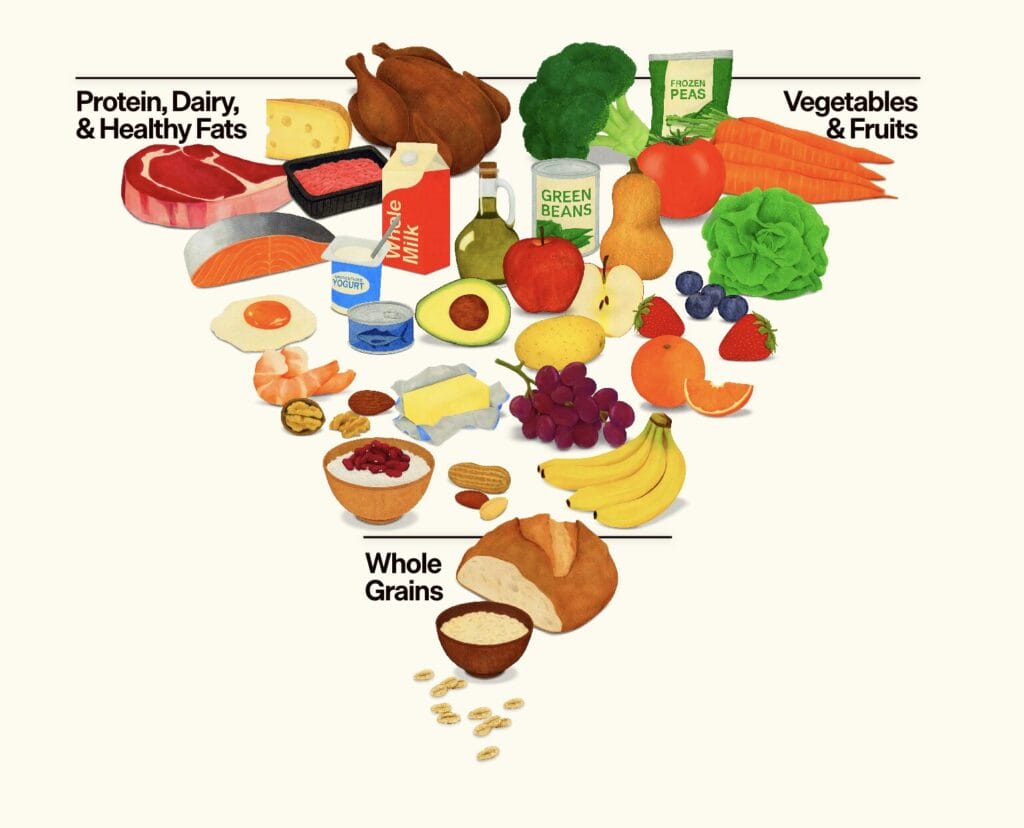
The guidelines suggest prioritizing protein, dairy, vegetables, fruits, healthy fats, and whole grains. Suggestions include non-supersized portions and limiting added sugars, sodium, and highly processed foods. Perhaps the most challenging thing for everyone involved is the identification of NO ADDED SUGAR for children under 11 years of age. Even fruit juices, if consumed at all, should be watered down considerably.
So, how do we adjust to these guidelines, to make the transitions as seamless as possible?
Motivation
Sometimes the big WHY is helpful. The government document, issued jointly by the departments of Health and Human Services and Agriculture, provided the following statistics:
- According to a recent analysis by Johns Hopkins, 48% of all federal tax dollars are spent on health care – and 90% of U.S. health care spending is on people with chronic diseases. Many of these conditions are preventable, often reversible, and often tied to the food we eat.
- The United States faces the highest obesity and Type 2 Diabetes rates (OECD) in the developed world.
- “The United States spend 2.5 times more per capita than the average of developed countries (OECD) on health care – and our life expectancy is 4 years lower. Chronic conditions tied to food are major contributors to this.
“The US childhood obesity rate is nearly five times higher than other developed countries.
“In the United States, one-third of teens are prediabetic, a fifth of children and adolescents have obesity, and almost as many young adults have nonalcoholic fatty liver disease.
“ 77% of military-aged youth aren’t eligible to join the military – primarily due to chronic diseases tied to food.
“A recent study of Medicare beneficiaries found that a 15% weight reduction resulted in nearly $1,000 per year in lower Medicare spending.”
Yet another benefit
It could be said that more money would be available to spend on programs for school-aged children and adolescents, if these issues were addressed.
Your informed dietary choices shared in your family and community can make the difference for your children and family and then ripple out to your friends’ families and entire communities.
Parents may want to talk with their pediatricians about their infants and toddlers after reading the guidelines. For about the first 6 months of life, only breast milk is recommended. When it is not available, iron-fortified infant formula is suggested. Continuing to breastfeed for 2 years or for as long as it may be mutually desired by mother and child is recommended. More specifics are shared, especially about potential allergy inducing items and what to do.
Here’s some more information adapted from the new guidelines:
Infancy and Early Childhood (Birth to 4 years)
• Meat, poultry, and seafood
• Vegetables and fruits
• Full-fat yogurt and cheese
• Whole grains
• Legumes and nut- or seed-containing foods prepared in a safe, infant-appropriate form
• Avoid added sugars.
Middle Childhood (5–10 years)
• Focus on whole, nutrient-dense foods such as protein foods, dairy, vegetables, fruits, healthy fats, and whole grains.
• Full-fat dairy products are important for children to help meet energy needs and support brain development.
• No amount of added sugars is recommended.
Adolescence (11–18 years)
• Rapid growth Increases needs for energy, protein, calcium, and iron — especially for girls due to menstruation. Adequate calcium and vitamin D are vital for peak bone mass.
• Adolescents should eat nutrient-dense foods such as dairy, leafy greens, and iron-rich animal foods.
• Significantly limit sugary and energy drinks, and avoid caffeinated beverages.
• Involve teens in food shopping and cooking so they learn how to make healthy food choices for life. Make cooking meals fun and a regular part of the household routine.
• If nutrient-rich foods aren’t always available, fortified foods or supplements may be needed under medical guidance.
Added sugars are mentioned at each level. So, what is “added sugar”? Put simply, anything other than fruits and vegetables, unpackaged and unprocessed. Milk contains significant sugar naturally. The dietary guidelines say, ”Added sugars may appear on ingredient labels under many different names, including high-fructose corn syrup, agave syrup, corn syrup, rice syrup, fructose, glucose, dextrose, sucrose, cane sugar, beet sugar, turbinado sugar, maltose, lactose, fruit juice concentrate, honey, and molasses. Examples of non-nutritive sweeteners include aspartame, sucralose, saccharin, xylitol, and acesulfame K.”
Invite teenagers into the process
The easiest way to change is for adults to involve teenagers in shopping after educating them and increasing their spidey senses about the best food choices. (Younger children may need supervision away from the marketplace and with more care about TV commercials until public policies have changed.) Sharing family responsibilities and choices, and crowding out the worst with better choices, may be a transition.
Other families may choose to discuss in family meetings how individual children benefit from healthier bodies, better access to learning, and more fun experiences with family members instead of lives dominated by snacks and nutrient-absent items.
Consider a withdrawal period for family members. Notice and chart reactions over a few weeks with new food choices to see what difference the new food choices make.
Please share your experiences with the institute. Remember: children may need numerous experiences with a new food (unadulterated and unprocessed) before liking it!