
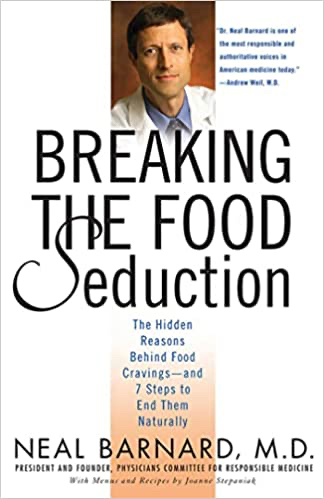
The Hidden Reasons Behind Food Cravings–And 7 Steps to End Them Naturally
Hedonic Eating
How the Pleasure of Food Affects Our Brains and Behavior
Processed foods and food reward
Small DM, DiFeliceantonio AG. Processed foods and food reward. Science. 2019 Jan 25;363(6425):346-347. doi: 10.1126/science.aav0556. PMID: 30679360. Signals that convey nutritional information from the gut to the brain regulate food reinforcement and food choice. Specifically, although central neural computations execute choice, the gut nervous system communicates information about the nutritional outcomes of choices to the brain so that representation of food values can be updated. Here, we discuss recent findings that suggest the fidelity of gut-brain signaling and the resulting representation of food value is compromised by processed foods. Understanding this axis could inform about feeding behavior involving processed foods and obesity. Study link
An addiction model-based mobile health weight loss intervention in adolescents with obesity
Vidmar A. P., Pretlow R., Borzutzky C., Wee C. P., Fox D. S., Fink, C. and Mittleman, S. D An addiction model-based mobile health weight loss intervention in adolescents with obesity. Pediatric Obesity 14, e12464, February 2019. New and creative approaches are needed to address pediatric obesity. If successful, this RCT may provide an innovative and cost-effective mHealth approach, based on addiction methods, for weight loss among adolescents with overweight and obesity. vidmar2019.pdf
Systematic review of Food Addiction as measured with the Yale Food Addiction Scale: implications for the Food Addiction construct
Penzenstadler L, Soares C, Karila L, Khazaal Y. Systematic review of Food Addiction as measured with the Yale Food Addiction Scale: implications for the Food Addiction construct. Curr Neuropharmacol. 2019;17(6):526‐538. https://doi.org/10.2174/1570159X16666181108093520 The concept of Food Addiction attracts much interest in the scientific community. Research is mainly based on the Yale Food Addiction Scale (YFAS), a tool developed to assess Food Addiction. Substance use disorder criteria have been used to develop this scale. The concept of Food Addiction has not been established to this day although it can be grouped with other EDs such as BED. More research is needed to understand this behavior and the differences between Food Addiction and other EDs. The criteria for Food Addiction should be revisited in light of the concepts currently used to examine behavioral addictions. CN-17-526 .pdf
Food addiction a valid concept?
Fletcher, P.C., Kenny, P.J. Food Addiction: a valid concept?. Neuropsychopharmacol 43, 2506–2513 (2018). https://doi.org/10.1038/s41386-018-0203-9 The authors argue the merits of opposing positions on the concept of Food Addiction. fletcher .pdf
Overeaters Anonymous A Mutual-Help Fellowship for Food Addiction Recovery
Rodriguez-Martin, B. C., & Gallego-Arjiz, B. (2018). Overeaters Anonymous: A Mutual-Help Fellowship for Food Addiction Recovery. Frontiers in Psychology, 9, 1491. htt s: doi.or 10.3389 f s .2018.01491 Opinion Overeaters_Anonymous .pdf
Food addiction and associations with mental health symptoms: a systematic review with meta-analysis
Burrows, T., Kay-Lambkin, F., Pursey, K., Skinner, J., & Dayas, C. (2018). Food addiction and associations with mental health symptoms: a systematic review with meta-analysis. J Hum Nutrition Diet, 31 (4) , 544-572 https://doi.org/10.1111/jhn.12532 Review burrows2018 .pdf
Food Addiction, eating addiction and eating disorders
Hauck, C., Cook, B., & Ellrott, T. (2020). Food addiction, eating addiction and eating disorders. Proceedings of the Nutrition Society, 79(1), 103–112. doi:10.1017/S0029665119001162 The concept of Food addiction is currently a highly debated subject within both the general public and the scientific communities. The term Food Addiction suggests that individuals may experience addictive-like responses to food, similar to those seen with classic substances of abuse. An increasing number of studies have established the prevalence and correlates of Food Addiction. Moreover, Food Addiction may be associated with obesity and disordered eating. Thus, intervening on Food Addiction may be helpful in the prevention and therapy of obesity and eating disorders. However, controversy exists about if this phenomenon is best defined through paradigms reflective of Diagnostic and Statistical Manual of Mental Disorders (DSM-5) substance-related disorders (e.g. Food Addiction) or non-substance-related disorders (e.g. eating addiction) criteria. This review paper will give a brief summarization of the current state of research on Food Addiction, a more precise definition of its classification, its differentiation from eating addiction and an overview on potential overlaps with eating disorders. Based on this review, there is evidence that Food Addiction may represent a distinct phenomenon from established eating disorders such as bulimia nervosa or binge-eating disorder. Future studies are needed to further examine and establish orthogonal diagnostic criteria specific to Food Addiction. Such criteria must differentiate the patterns of eating and symptoms that may be similar to those of eating disorders to further characterize Food Addiction and develop therapy options. To date, it is too premature to draw conclusions about the clinical significance of the concept of Food Addiction. confoptimaldiet.pdf
Sugar Addiction: From Evolution to Revolution
Wiss, D. A., Avena, N., & Rada, P. (2018). Sugar Addiction: From Evolution to Revolution. Front psychiatry, 9, 545. https://doi.org/10,3389/fpsvt.2018.00545 From the authors’ conclusion: “There is strong evidence of the existence of sugar addiction, both at preclinical and clinical level. Our model has demonstrated that five out of eleven criteria for SUD are met, specifically: use of larger amounts and for longer than intended, craving, hazardous use, tolerance, and withdrawal. … “From an evolutionary perspective, we must consider addiction as a normal trait that permitted humans to survive primitive conditions when food was scarce. As we evolved culturally, the neural circuits involved in addictive behaviors became dysfunctional and instead of helping us survive they are in fact compromising our health. From a revolutionary perspective, understanding the molecular, and neurological/psychological intricacies of addiction (sugar, drugs of abuse) will permit the discovery of new therapies (pharmacological and non-pharmacological) and possible management of at least one crucial factor in the occurrence of obesity.” Sugar Addiction: From Evolution to Revolution