
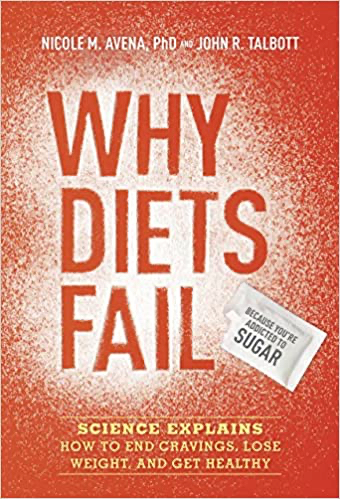
Science Explains How to End Cravings, Lose Weight, and Get Healthy
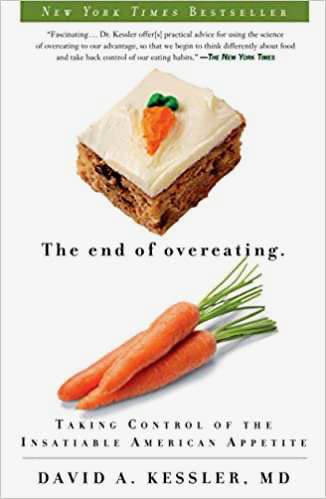
End of Overeating
Taking Control of the Insatiable American Appetite

Salt Sugar Fat
How the Food Giants Hooked Us

Dorito Effect
The Surprising New Truth About Food and Flavor
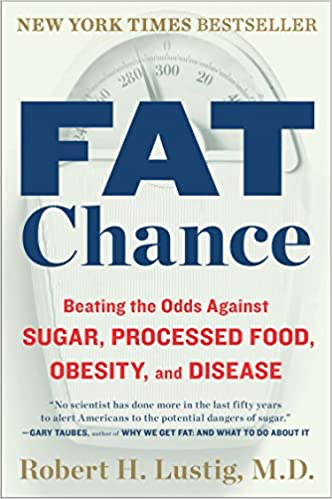
Fat Chance
Beating the Odds Against Sugar, Processed Food, Obesity, and Disease
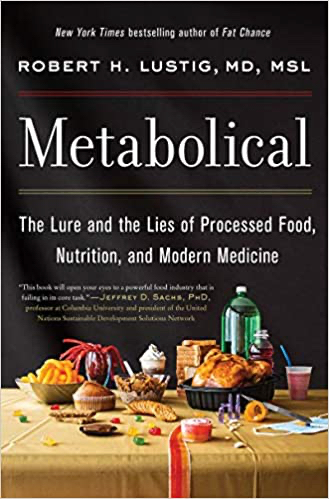
Metabolical
The Lure and the Lies of Processed Food, Nutrition, and Modern Medicine
Prevalence of food addiction in children and adolescents A systematic review and meta-analysis
Yekaninejad MS, Badrooj N, Vosoughi F, Lin CY, Potenza MN, Pakpour AH. Prevalence of food addiction in children and adolescents: A systematic review and meta-analysis. Obes Rev. 2021 Jun;22(6):e13183. https://doi.org/10.1111/obr.13183 Epub 2021 Jan 6. PMID: 33403795 Free PMC article FA has been a debated concept, with some people questioning its validity. However, the development and refinement of the Yale Food Addiction Scale (YFAS) have supported the clinical relevance of defining FA. Although FA has not been recognized or defined by the Diagnostic and Statistical Manual of Mental Disorders fifth edition (DSM-5), the YFAS follows criteria of substance use disorders proposed by the DSM to make provisional FA diagnoses.Prevalence of FA as determined using the YFAS-C has been reported in 18 publications. The meta-analysis estimated an overall FA prevalence at 15% (95% CI: 11–19%) among children and adolescents, with an I squared of 95.64%. Moreover, the prevalence in the community samples was 12% (95% CI: 8–17%) and 19% (95% CI: 14–26%) in the overweight/obese samples. The prevalence estimatesreported here represent recent/current findings. Additionally, FA prevalence tended to be higher and YFAS-C scores were higher inchildren and adolescents with overweight/obesity (prevalence of 19% and score of 2.63) as compared with their community-based counter-parts (prevalence of 12% and score of 1.54). Further meta-regression analysis revealed that the difference of FA prevalence approached statistical significance (p= 0.056) and that of the YFAS-C score reached statistical significance (p= 0.002).The relatively high FA prevalence found in children and adolescents is comparable with that in adults. Therefore, FA appears relevant to both pediatric and adult populations. Moreover, similar to adults, a trend of higher FA prevalence was found among children with over-weight/obesity when compared with those without overweight/obesity in the community. Specifically, higher FA prevalence was found in adults with obesity than those without obesity in a meta-analysis and two narrative reviews. Our meta-analysis on children and adolescents resonates with these findings and extends them to a younger age group. In addition to FA prevalence, higher YFAS-C score found in our meta-analysis supports the importance to considering FA in youth. Therefore, healthcare providers, policymakers, parents, and other stakeholders should attend to FA in youth. Our meta-regression results showed non-significant effects of age and gender on both FA prevalence and YFAS-C scores. Thus, when considering FA among pediatric populations, healthcare providers and other stakeholders should notice that boys and girls may share comparable risks for developing FA. All analyzed studies used the same instrument, the YFAS-C, to assess FA. The YFAS-C is a “gold standard”in assessing FA amongchildren and adolescents. Specifically, it has been developed with rigorous methodologies, including the adoption of addiction criteria pro-posed in the DSM-5 and the descriptions modified for use among youth. Moreover, the strong psychometric properties of the YFAS-C have been reported in many studies using multiple testing methods,including classical and modern test theories. Moreover,using the same instrument to assess FA across the synthesized studies included in the present meta-analysis helps to ensure measurement quality. Therefore, together with the nonsignificant publication bias suggested by the Egger and Begg tests, we have confidence that the estimated FA prevalence and YFAS-C score are very reliable. In conclusion, FA is an important topic among youth. With the relatively high prevalence of FA among children and adolescents found in the present systematic review and meta-analysis, healthcare providers, policymakers, and other stakeholders should design appropriate interventions to address FA in this age group. Moreover, higher estimates of FA were observed among children and adolescents with overweight/obesity as compared with lean/normal-weight individuals. Thus, targeted interventions may be particularly relevant to children and adolescents with overweight/obesity. OBR-22-e13183 .pdf
Separating the Signal from the Noise: How Psychiatric Diagnoses Can Help Discern Food Addiction from Dietary Restraint
Wiss, D., & Brewerton, T. (2020). Separating the Signal from the Noise: How Psychiatric Diagnoses Can Help Discern Food Addiction from Dietary Restraint. Nutrients, 12(10).https://doi.org/10.3390/nu12102937 “…While there is disagreement regarding FA, it appears that much of the controversy pertains to the treatment (lacking data) rather than the existence of the problem (robust data). More specifically, nutrition interventions for individuals with FA and co-occurring ED characterized by high levels of dietary restraint are less clear than for individuals with FA and no history of restrictive ED. Individualized treatment might be helpful based on the existence of FA, but only after it has been determined that the FA signal represents an addiction to food (true positive), rather than a consequenceof dietary restraint, food insecurity or insufficiency, or other forms of deprivation or food-related neglect (false positive). Dismissing FA as a clinical entity is ill informed and not helpful. FA may warrant consideration as a distinct category in the DSM, which might lead to additional research at the individual and group level, as well as public health efforts to improve the national food environment. …” wiss2020 .pdf
Meeting of Minds around Food Addiction Insights from Addiction Medicine, Nutrition, Psychology, and Neurosciences
Constant, A., Moirand, R., Thibault, R., & Val-Laillet, D. (2020). Meeting of Minds around Food Addiction: Insights from Addiction Medicine, Nutrition, Psychology, and Neurosciences. Nutrients, 12(11), 3564. http://dx.doi.org/10.3390/nu12113564 Behaviorial Neuroscientists point of view: the DSM-5 [118] does not recognize FA in itself, but it identifies different forms of substance-related and addictive disorders (including gambling) that can be used as a reference framework for our discussion. In this context,if we accept the existence of FA, then the neurobiological characteristics of substance-related and addictive disorders should reveal common patterns between food and drug abuse. The point is that the FA construct must be supported by precise definitions, as well as dedicated neurobiological and neuroimaging studies. These definitions must be supportedby concrete data and not only by shortcuts based on analogies with obesity or food abuse. Even though we must assume that substance addiction always starts with substance use, not all obese and/or bingeing ED-subtype patients have FA, and not all “food addicts” are obese. All these data support the existence of a specific FA brain phenotype that can be detected innormal-weight, overweight, or obese individuals and that is characterized by anomalies in the reward and inhibitory control processes, with likely corollary consequences in the limbic/emotional and cognitive/attentional spheres (Figure 2). Even though a recent meta-analysis of fMRI studies defends an addiction model of obesity, characterized by reduced cognitive control and interoceptive brain responses [141], this vision is probably restricted to part of the obesity spectrum and cannot be generalized to all forms of obesity 10.3390@nu12113564 .pdf
Food Addiction and Psychosocial Adversity Biological Embedding, Contextual Factors, and Public Health Implications
Wiss, D. A., Avena, N., & Gold, M. (2020). Food Addiction and Psychosocial Adversity: Biological Embedding, Contextual Factors, and Public Health Implications. Nutrients, 12(11), 3521. htt s: doi.or 10.3390 nu12113521 Review wiss2020food .pdf