
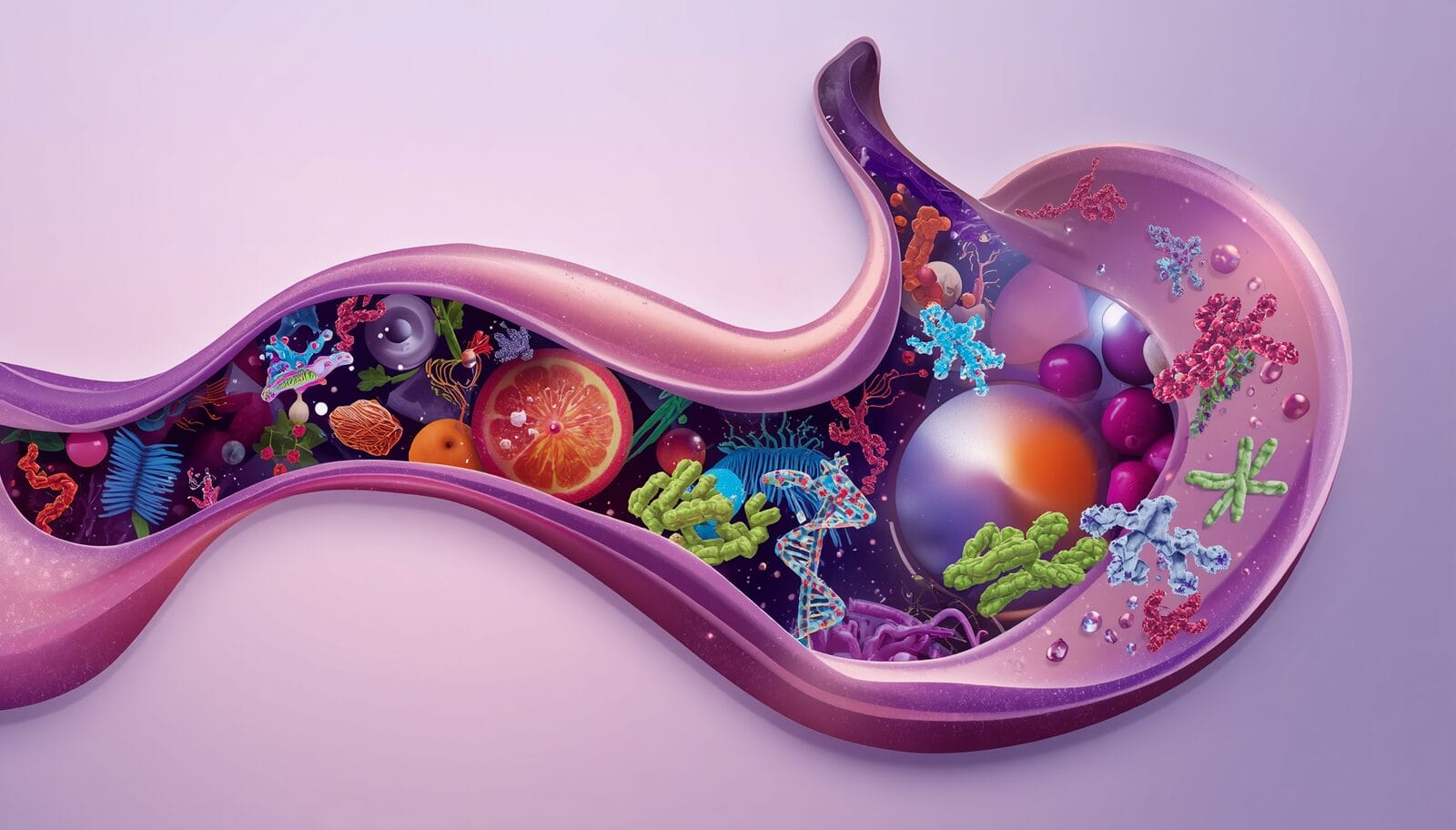
Rather than willpower, it might be your biology
By David Wiss, PhD, RDN, IFMCP
The field of Food Addiction has come a long way. Many of us are now proposing the term Ultra-Processed Food Use Disorder to align with DSM-5 terminology. What was once dismissed as a lack of willpower — or worse, a moral failing — is now recognized as a legitimate neurobiological phenomenon with measurable behavioral, psychological, and biological signatures. That progress is real. It has given language to experiences that were previously invisible.
But progress has a next step. And for too many people struggling with compulsive eating, that next step is biological precision.
If you’ve struggled with compulsive eating, you’ve probably heard it all. Just eat less. Try harder. Get to therapy. Maybe you have tried therapy, medication, support groups, and elimination diets. Maybe some of it helped. But if you’re still stuck in the cycle, here’s something most providers have never said to you: the problem might not be willpower; it might be your biology. And your biology has almost certainly never been fully tested.
Food Addiction lives at a fascinating and often frustrating intersection of psychology and physiology. What rarely done is to look upstream. The literature on adverse childhood experiences is unambiguous — trauma reshapes the body’s stress response systems in ways that drive compulsive behavior for years, sometimes decades. This isn’t just psychological. It’s immunological, hormonal, and gastrointestinal. When someone eats compulsively in response to stress, they’re often medicating a nervous system that was dysregulated long before the eating patterns began.
Whether someone presents with binge eating, rigid restriction, or classic Food Addiction, the underlying biology often shows a similar pattern of disruption: dysregulated dopamine signaling, a compromised gut microbiome, elevated inflammatory markers, blunted cortisol response, and nutritional deficiencies that quietly sabotage the neurotransmitter systems people are trying to fix with food. The specific pattern — and therefore the repair strategy — depends on the individual’s history, neurodevelopment, and genetics.
This is the premise I built FxMed Mental Health around. Precision assessment should precede treatment planning, not follow years of failed attempts. We run comprehensive specialty lab panels that assess gut permeability, food sensitivities, nutrient status, hormone rhythms, genetic variants affecting neurotransmitter metabolism, and markers of systemic inflammation. For people with Food Addiction, this testing often reveals what conventional providers have missed: zinc and magnesium deficiencies that undermine impulse control, elevated zonulin indicating gut barrier
compromise, cortisol patterns consistent with HPA axis dysregulation, and genetic variations that help explain why standard interventions haven’t worked.
What’s built on that foundation isn’t simply a supplement protocol. It’s a care plan that integrates functional medicine with psychiatry, psychology, and — for those for whom it’s meaningful — spirituality. The relational and meaning-making dimensions of recovery that the addiction field has long understood to be essential remain central. Community, accountability, purpose — these aren’t replaced by a lab panel. They’re supported by one. When the biological load is reduced, the emotional and spiritual work people have been doing often finally gains the traction it deserves.
Food Addiction and eating disorders share more than symptom overlap. They share root causes. And those root causes deserve a real investigation — not just another referral to a framework designed for someone with an entirely different biological profile.
You’re not broken. You’re likely under-tested.
David Wiss, PhD, RDN, FMCP, is a functional medicine clinician and mental health researcher who specializes in identifying biological root causes that conventional care often misses — because most people aren’t treatment-resistant; they’re just undertested. His work is grounded not only in rigorous science but in a deep respect for the healing intelligence encoded in living systems. Dr. Wiss has authored more than 30 peer-reviewed publications, and his research has been cited in The New York Times, National Geographic, and Washington Post.