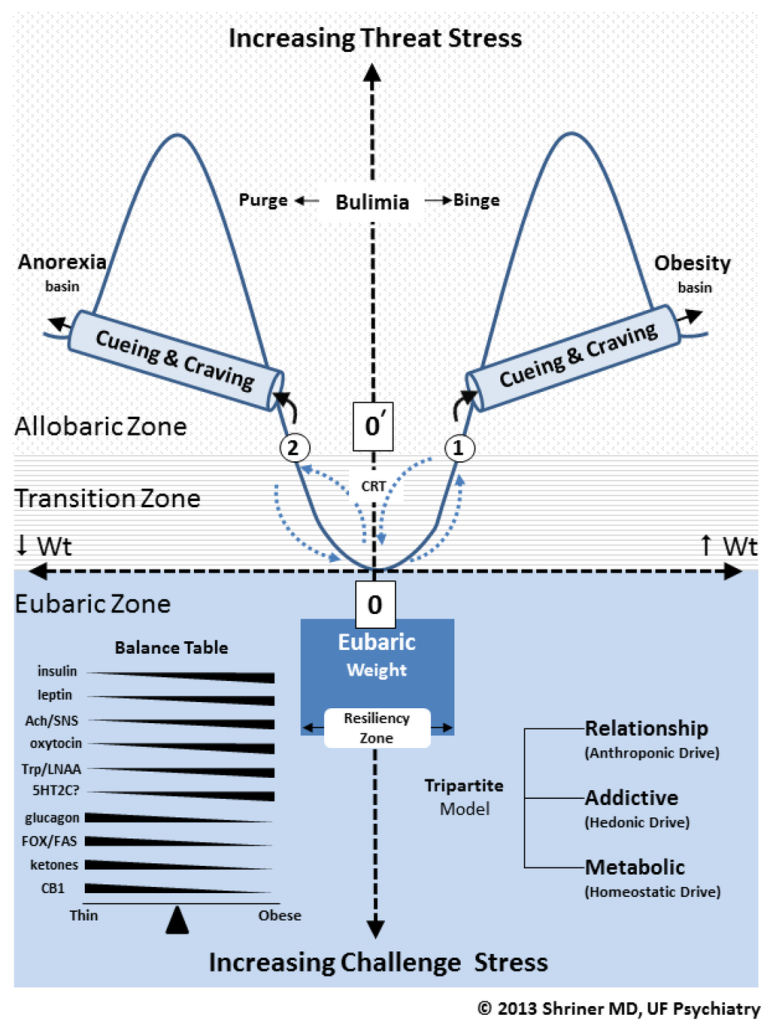
Shriner, R., & Gold, M. (2014). Food Addiction: an evolving nonlinear science. Nutrients, 6(11), 5370-5391. https://doi.org/10.3390/nu6115370
Supporters of Food Addiction science, however, address this argument in part by pointing out that many patients who identify themselves as Food Addicts do not necessarily like the foods they abuse, especially during their bingeing episodes. In other words, they may report less hedonic or liking valences toward food and more of a desire to avoid negative feelings or not wanting to feel bad when they are deprived access to their favorite foods of abuse along the lines outlined by Berridge [44] and Koob [41]. It has been our experience in the Living with Food Program at the University of Florida that many of our patients disliked the very foods they tended to abuse, but felt compelled to continue to abuse them. In an attempt to account for this phenomenon the Tripartite Model includes the designation of addiction, instead of confining this level to the simple designation of hedonia, even though such addiction may involve at least initially hedonic drivers, again, as described by Berridge and Koob.